












Java App Development Company
Nimap, your go-to Java App Development Company, specializes in building high-performance and reliable apps for your business growth.
Proven Track Record
Global Clients
We Have Completed
Strong Developers
Building Java Applications That Actually Work in the Real World
- Most businesses don’t just need code. They need an application that works smoothly once real users start using it. That’s where Java still makes a lot of sense. It’s stable, handles large systems well, and companies have been relying on it for years to run serious business applications.
- At Nimap, our Java application development services usually start with understanding what the system actually needs to do. Sometimes it’s building a new platform from scratch. Other times, it’s fixing or modernizing an existing Java system that has been running for years but now needs better performance or new features.
- When we make apps, we usually use well-known Java frameworks like Spring and Spring Boot. They help you set up the system correctly and keep it manageable over time. The project could be a backend system, a full business platform, or something that needs to work well in the cloud. But the idea is still the same. Make something that is stable and reliable so that the team can keep using it and make it better as the business grows.
Our Global Clients


Our Startup Clients


Our Enterprise Clients


⭐4.5/5
based on 19,000+ reviews on
⭐4.9/5
Based on 2000+ reviews on
400+
Developers
1200+
Projects Delivered
16+
Year's Proven Track Record
400+
Developers
1200+
Projects Delivered
97%
Client Satisfaction
Looking for Java App Development That Delivers ROI? Let's Create Solutions That Drive Business Growth!
Key Benefits of Java App Development Services
Platform Independence
One practical thing about Java is that it doesn’t tie the application to just one system. Once the application is built, it can run across different environments without rewriting the whole thing. For teams managing multiple systems, this saves a lot of effort later.
High Security
Java has always been trusted in places where security matters. That’s why you’ll often see it behind banking systems or large internal platforms. The language already comes with strong security mechanisms, so developers are not starting from zero.
Scalability
Some applications start small but slowly grow as more users come in. Java handles that kind of growth quite well. Many large business platforms running today started the same way and expanded over time without needing a complete rebuild.
Strong Community Support
Over time, Java became so common that most coders eventually encounter it. Thanks to widespread use, countless tools, ready-made structures, and community-driven fixes exist. Facing a tough problem? Chances are someone already figured out how to handle it.
Performance and Reliability
Years go by, yet many businesses stick with Java due to its predictable performance. When things are configured right, apps often keep working without issues long-term. Stability like that explains why big organizations haven’t let it go.
Types of Java Applications We Develop
Enterprise Applications
Large businesses often run on systems like ERP platforms, CRM tools, or internal management software. These systems handle daily operations, data flow, and reporting across teams. Java works well here because it can manage complex processes without becoming unstable as the system grows.
Web Applications
Many businesses today need custom web platforms rather than generic tools. Using Java frameworks, we build web applications that support real business workflows, from customer portals to internal dashboards. The focus stays on building something teams can actually use every day without friction.
Cloud-Based Applications
A lot of modern applications now run on cloud infrastructure instead of traditional servers. Java fits well in this setup because it adapts easily to cloud environments and scaling needs. Businesses get applications that can grow with traffic without constant rebuilding.
Mobile Applications
Java has long been a core technology behind Android applications. For businesses planning mobile platforms, it helps build apps that stay stable across devices and updates. It’s still a practical option when the goal is to build reliable Android solutions.
API & Backend Development
Behind every modern application, there’s a backend managing data, logic, and communication between systems. Java is commonly used to build these backend services and APIs because it handles large volumes of requests without breaking down. This makes it a solid choice for platforms expected to grow over time.
Popular Java Frameworks Used in Development
Spring Framework
For many enterprise projects, Spring ends up being the base of the whole application. It helps structure large systems in a way that doesn’t become messy as new features keep getting added. When businesses are building long-term platforms, this framework usually fits naturally into the stack.
Spring Boot
In many projects today, teams don’t want to spend weeks setting up the base structure of an application. Spring Boot helps speed that part up so development can move straight into building actual features. It’s commonly used when applications are expected to scale or run in cloud environments.
Hibernate
When applications deal with large amounts of data, managing database interactions can become repetitive and heavy. Hibernate helps simplify that layer by handling how application data connects with the database. This makes it easier to build systems that manage complex data without slowing development.
Apache Struts
A lot of enterprise systems that have been running for years were originally built on Struts. Instead of replacing everything, many businesses continue improving those systems gradually. In those cases, working with Struts becomes part of maintaining and extending existing platforms.
JavaServer Faces (JSF)
Some enterprise web applications require structured interfaces where components are reused across many pages. JSF helps manage that kind of UI setup. It works well for business platforms where consistency across dashboards, forms, and internal tools matters.
Looking for Java App Development That Delivers ROI? Let's Create Solutions That Drive Business Growth!
Java Application Development Process
Requirement Analysis
We start by understanding what the business actually needs to build. Not just features, but how people will use the system day to day. These early talks usually help clear up things that weren’t obvious at first.
Architecture Design
Once the idea is clearer, we plan how the system should be structured. Getting this part right helps the application stay stable as more users or features get added later.
Development
Then we start building. Feature by feature, the application takes shape using Java and the tools that fit the project.
Testing
As things come together, we keep testing the system. If something breaks or behaves oddly, it gets fixed before moving ahead.
Deployment
When everything looks stable, the application is moved to the live environment where real users start using it.
Maintenance & Support
Once live, attention stays on performance; hiccups get adjusted without delay. When shifts in operations call for it, tweaks roll out smoothly. Oversight continues quietly behind the scenes.
Why Do Businesses Choose Java for Enterprise Solutions?
Handles large-scale applications
When a system starts getting bigger, with more users, more data, and more activity, Java usually holds up well. That is one of the reasons many large business platforms have been running on it for years.
Secure and reliable architecture
For enterprise software, stability is important. Java has built a reputation for being dependable, which is why industries like banking, finance, and large organizations often trust it for their core systems.
Excellent integration capabilities
Businesses rarely run just one tool. There are databases, third-party platforms, and internal systems. Java makes it easier to connect these pieces so everything can work together without too much friction.
Strong support for microservices architecture
Nowadays, businesses often choose to develop software using small components rather than a single massive structure. Because Java works efficiently with this method, groups can adjust and grow their programs gradually without major disruptions.
Industries Using Java Applications
FinTech
Finance platforms deal with constant transactions and sensitive data every minute. Java is often used here because it stays stable even when systems are under heavy load. In our work, we usually focus on building systems that keep financial operations running smoothly without interruptions.
Healthcare
Hospitals and healthcare platforms manage patient records, reports, and internal systems every day. Java helps keep these systems reliable and secure. When we build solutions for this space, the focus stays on keeping data organized and easy for medical teams to access.
E-commerce
Online stores can suddenly get thousands of users during a sale or promotion. Java helps the platform stay steady even during those busy moments. Our approach is usually to build systems that keep browsing, payments, and orders running without slowing things down.
Logistics
Logistics companies track shipments, deliveries, and warehouse activity all the time. Java works well for systems that need to manage a lot of moving parts. We usually build platforms that help teams track operations clearly and keep things moving on schedule.
Manufacturing
Running factories means keeping track of output, stock levels, and routine tasks. Software makes this possible. Because stability matters during extended operation periods, many choose Java for its consistent performance. The tools we develop aim to simplify how workers observe workflows and handle ongoing processes.
Fitness
Fitness platforms often include memberships, bookings, and trainer schedules. Java helps manage the backend so everything stays organized behind the scenes. Our approach is to keep the system simple so gyms and fitness centers can manage members without hassle.
Real Estate
Property platforms manage listings, inquiries, and large sets of property data. Java helps keep these platforms stable even as the number of users grows. We usually build systems that make property browsing and management easier for both businesses and customers.
Looking for Java App Development That Delivers ROI? Let's Create Solutions That Drive Business Growth!
Why to Choose the Nimap - Right Java App Development Company in India?
Experience in Java technologies
Java has been part of our work for years, so we have seen how it behaves in real business systems. From smaller internal tools to large platforms, we understand how to build things that actually hold up over time.
Expertise in frameworks like Spring and Hibernate
Today’s Java applications operate using tools such as Spring or Hibernate. Because we interact with these often, maintaining a clear design becomes more natural over time. As the software expands, control stays within reach.
Strong portfolio and case studies
A lot of our understanding comes from projects we have already worked on. Different industries bring different challenges, and those experiences help us approach new projects in a more practical way.
Agile development approach
Starting small helps teams stay visible during development, so companies watch progress unfold gradually. Because feedback fits naturally into ongoing tasks, adjustments slip in without delays.
Post-development support services
After an application goes live, small issues, updates, or improvements are pretty normal. We usually stay connected with the project so the system keeps running properly as the business continues to grow.
Future of Java App Development
A lot of companies are shifting their systems to the cloud now. Java is moving along with that change. Instead of applications sitting on one fixed server, they are being built to run more comfortably on cloud platforms.
Big applications used to be built as one large system. That often made updates difficult. Now businesses prefer smaller services working together, and Java fits well with this way of building software.
Businesses are starting to add smarter features to their applications. Things like recommendations, predictions, or automation. Java is slowly finding its place around these AI tools as companies experiment with these ideas.
Java in modern DevOps ecosystems
The way software is released has also changed. Teams update applications more frequently instead of waiting for big releases. Java applications today are being shaped to work better with these faster development and deployment cycles.
Real-World Case Studies of Our Impactful Solutions
case studies
Real Results. Real Impact. Real Success.
80% Engagement Lift in Home Décor
80% Engagement Lift – Immersive Product Visualization
65% Better Recommendations – AI-Driven Styling Suggestions
24/7 AI Assistance – Faster Customer Decisions
AI Tool Development for Amicus Wealth
150% Productivity Boost – Streamlined Portfolio Reviews
85% Accuracy Improvement – Real-Time Financial Insights
~10 ~25 Portfolios/Day – Per Advisor Efficiency
AI-Powered Resume Matching via all-MiniLLM & Qdrant
70% Reduction In Screening Time – Automated Resume Shortlistingd
85% Match Accuracy – Semantic Search With all-MiniLM & Qdrant
3× Faster Candidate Filtering – Instant Job-Fit Scoring
case studies
AI solutions were deployed seamlessly through a streamlined, end-to-end process. Designed and launched with speed, every phase was handled efficiently, ensuring a smooth implementation and delivering fast rollout with measurable results.
80% Engagement Lift in Home Décor Visualization via Nimap’s AI Agents & AR/VR
80% Engagement Lift – Immersive Product Visualization
65% Better Recommendations – AI-Driven Styling Suggestions
24/7 AI Assistance – Faster Customer Decisions
Know More →
AI Tool Development Boosts Portfolio Reviews by 150% for Amicus Wealth
150% Productivity Boost – Streamlined Portfolio Reviews
85% Accuracy Improvement – Real-Time Financial Insights
~10 ~25 Portfolios/Day – Per Advisor Efficiency
Know More →
AI-Powered Resume Matching Boosts Hiring Efficiency for Recruiters via all-MiniLM & Qdrant
70% Reduction In Screening Time – Automated Resume Shortlistingd
85% Match Accuracy – Semantic Search With all-MiniLM & Qdrant
3× Faster Candidate Filtering – Instant Job-Fit Scoring
Know More →
How Nimap Cut Medical Workflow Time by 2-3x with Agent-Based LangChain + LLMs
90% Reduction In Admin Workload – Automated Report Processing
2–3× Faster Report Turnaround – Streamlined Data Handling
95% Accuracy In Documentation – Reduced Human Errors
Know More →
Achieve Digital Transformation with Nimap’s Java Solutions—Your Ideas, Our Execution!
Related Articles

Leveraging Java for AI and Machine Learning Applications in 2025
Java for AI and Machine Learning: A Key Player In today’s technology-driven era, Artificial Intelligence (AI) and Machine Learning (ML) are revolutionizing industries and reshaping
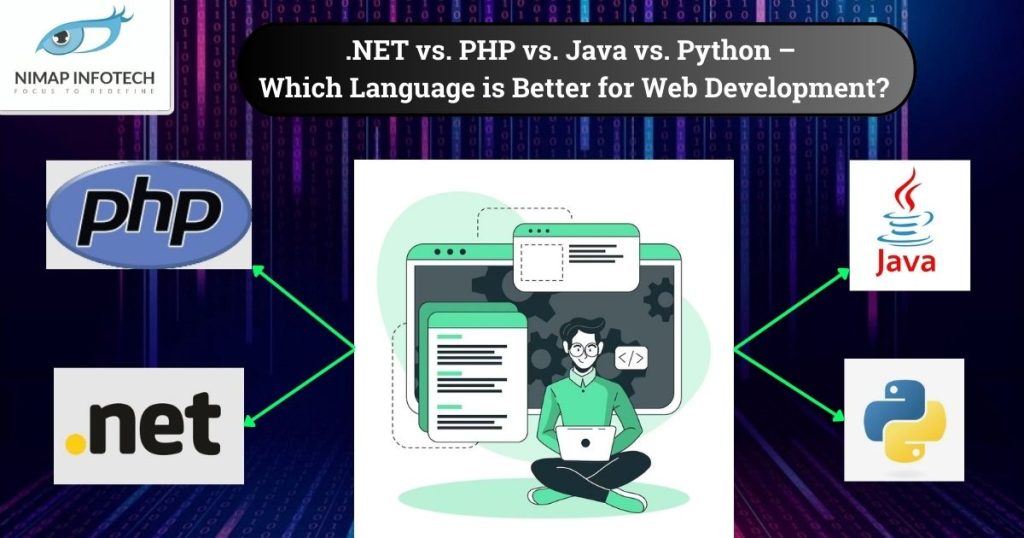
.NET vs. PHP vs. Java vs. Python – Which Language is Better for Web Development?
New languages and technologies introduce changes to web development quickly daily. In the realm of web development, a handful of tried-and-true languages have stood the
Kotlin vs Java: What to Choose for Android Development
Welcome to this Kotlin vs Java comparison blog! Java and Kotlin are two popular programming languages used in the software development sector. Java has been

Frequently Asked Questions
Why do businesses still choose Java for application development?
Java has been around for a long time, and many large systems still run on it. It handles heavy workloads well and stays stable as applications grow. That’s why many businesses still rely on it for serious platforms.

What kind of applications can be built using Java?
Java is used for many things, like enterprise platforms, web applications, backend systems, APIs, and even Android apps. At Nimap, most projects involve building business systems that need stability and long-term reliability.
Why are frameworks like Spring and Hibernate commonly used in Java projects?
These frameworks help organize the application properly and reduce repetitive work during development. Our team usually uses them, so the system stays easier to manage as new features are added later.
Can Java applications support large business operations?
Yes, that’s one of the main reasons companies choose it. Java handles large data volumes and high user traffic quite well, which is why many enterprise platforms still run on it.
How does Nimap approach Java application development projects?
We usually begin by understanding how the system will actually be used in daily business operations. From there, the application is built step by step so it stays stable and practical for the team using it.
Can existing Java applications be improved or modernized?
Yes, many businesses already have older Java systems running important operations. In many cases, we help improve performance, add new features, or adjust the system so it works better with modern setups.
Is Java suitable for modern cloud and microservices-based applications?
Yes, Java works well with modern frameworks and cloud environments. Many companies now run Java applications using microservices and cloud platforms, which makes scaling and updates easier.